
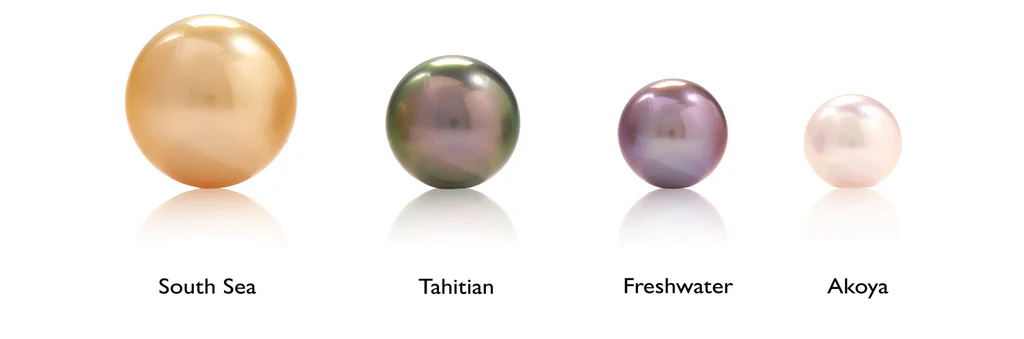
Let’s clear up the most persistent myth in pearl buying right now: price does not reliably tell you which type of pearl is “best.” It tells you where scarcity and demand meet at a given moment. A freshwater pearl with radiant luster can outshine a South Sea pearl with dull, spotted skin and cost a fraction of the price.
Understanding what actually drives differences in appearance and cost will make you a far sharper shopper.
The myth: bigger origin = better pearl
You’ve seen the hierarchy implied in luxury marketing: Tahitian at the top, then South Sea, then Akoya, then freshwater. The implication is that origin is a quality rank. It isn’t. Origin describes the species, farming environment, and typical characteristics of a pearl family. Each family has a range stretching from exceptional to mediocre. The best freshwater specimens genuinely rival mid-tier Akoya in everyday wear.
The real driver of visual quality in any family is luster, surface cleanliness, and how well the strand is matched.
Breaking down each family honestly
Freshwater
Grown in mussels (primarily farmed in China), freshwater pearls are often the first thing people buy and the last thing they stop wearing. Because the culturing process can produce many pearls per harvest, the range of shapes is wide: ovals, drops, baroques, buttons. The bodycolors white, cream, peach, lavender tend toward warmth.
What freshwater lacks in mirror-sharp luster at entry level, it makes up for in personality, variety, and value. Fine-grade freshwater with high nacre content can develop luster that surprises people who last saw the category in the 1990s.
Akoya
The pearl that built Japan’s fine jewelry reputation. Saltwater, smaller diameters, almost always presented as round or near-round. In top grades, the luster is famously intense sharp highlights, a bright reflective surface that reads almost metallic under good lighting.
The classic cream or white with rose overtone Akoya strand is still the benchmark for formal pearl jewelry in many markets. Expect to pay for that roundness and that match.
South Sea
From the Pinctada maxima oyster the silver-lip for white-and-cream pearls, the gold-lip for warm golden tones. Major farming regions include Australia, Indonesia, and the Philippines. The pearls are typically larger, the nacre naturally thick, and the surface has a satiny quality rather than the glassy sharpness of Akoya.
South Sea is where you go when you want presence. A 13mm white South Sea strand makes a statement across a room. The price reflects both rarity and size larger, cleaner examples at top grades are genuinely scarce.
Tahitian
Not black. Repeat: not simply black. The palette runs through charcoal, silver, pistachio green, aubergine, peacock (green with rose and gold shimmer), and dozens of intermediate hues. Grown from the black-lip Pinctada margaritifera oyster, primarily in French Polynesia. Browsing freshwater and saltwater pearl jewelry side by side is a useful exercise the contrast between Tones of Freshwater and Golden Age designs shows how much bodycolor and shape affect the overall read of a piece.
The most sought-after Tahitian pearls combine a dark bodycolor with a strong orient that secondary shimmer that makes the surface seem to shift as it moves. At its best, the effect is unlike anything else in jewelry.
The one question that cuts through all of it
When comparing options across families, ask this: “Under natural light, does the surface show a sharp, clear reflection, or does it look soft and hazy?”
Luster is the answer. Everything else origin, size, roundness adjusts the price ceiling. Luster is what your eye actually responds to.
Which type to choose
| Your priority | Best starting point |
| Maximum luster per budget | Fine freshwater or entry Akoya |
| Classic formal strand | White round Akoya |
| Bold size and golden warmth | South Sea |
| Color drama and modern edge | Tahitian |
Pearl trade names reflect industry convention; request documentation for specific origin claims on investment-level purchases.